

| Availability: | In stock |
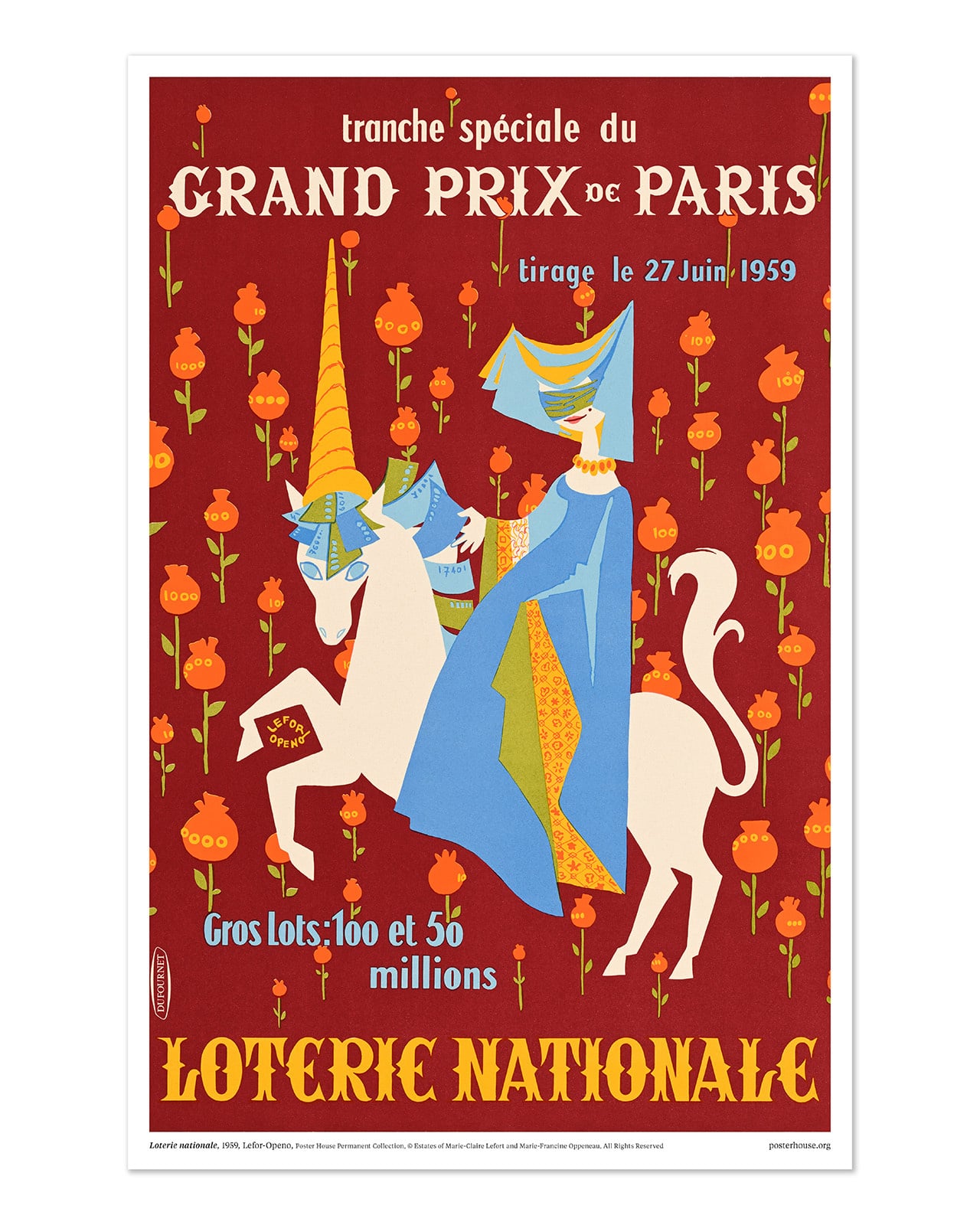
A print of Loterie Nationale, 1959, by Lefor-Openo.
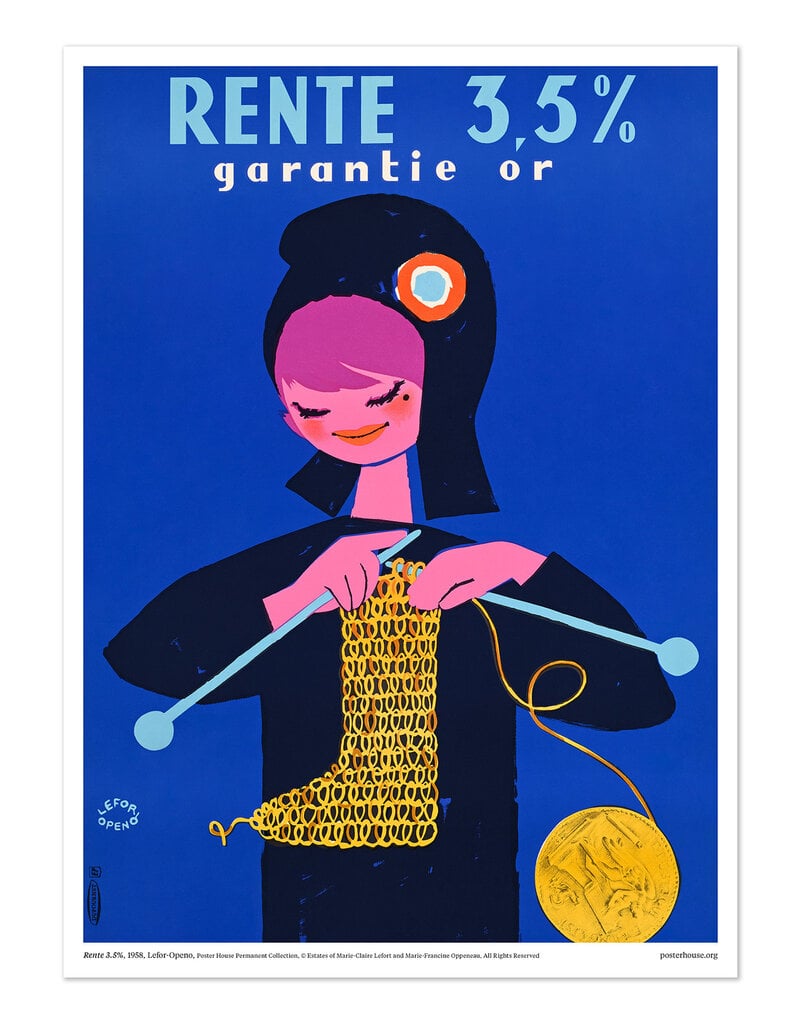
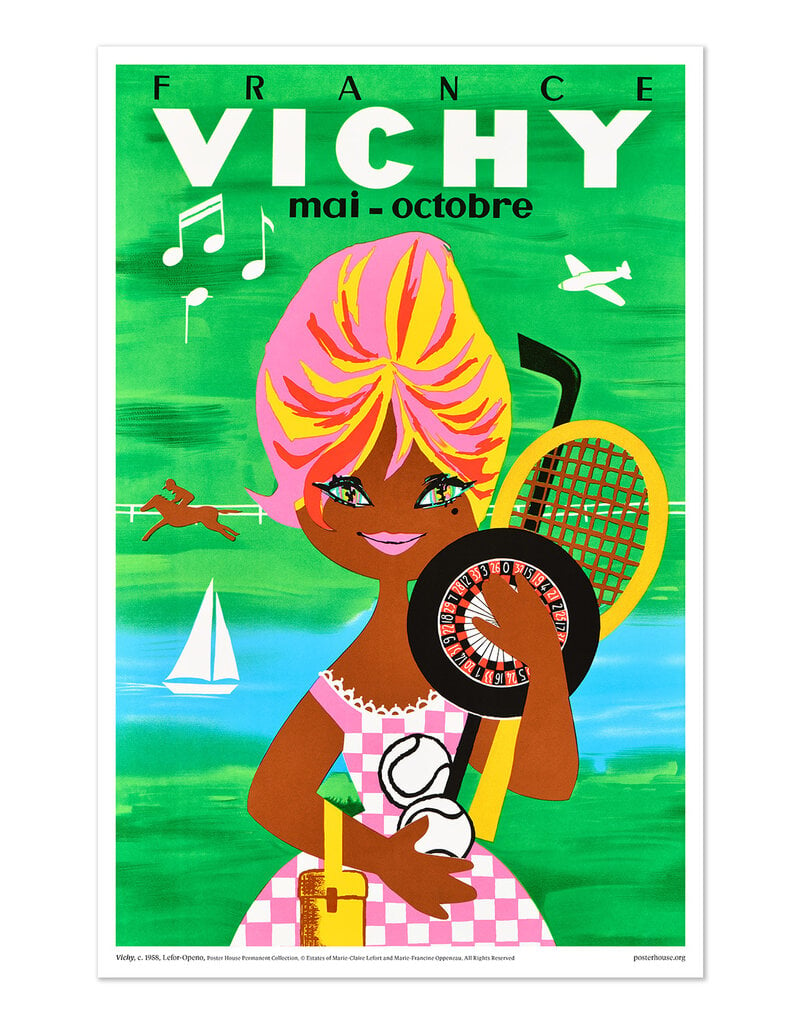
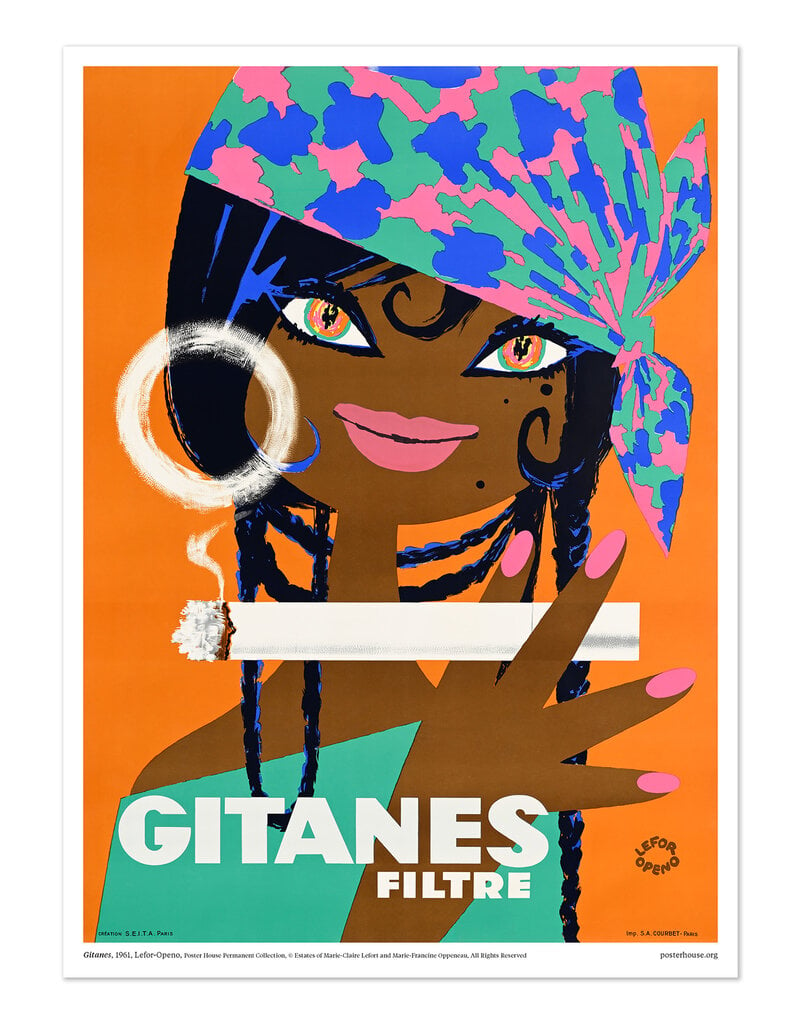
The posters of postwar France rarely made plain its daunting economic challenges. Instead, advertising focused on producing bright, optimistic images that saturated streets with cute rather than with chaos. This trend was epitomized by a female design team known as Lefor-Openo (Marie-Claire Lefort and Marie-Francine Oppeneau), whose signature upbeat, cartoonish characters would become emblematic of French mid-century commercial and political advertising.
France’s National Lottery was established in 1933 to financially supplement weakened social systems. The lottery proved incredibly popular with nearly half of the adult population of the country participating, establishing the National Lottery as a useful addition to the French welfare system. In the early 1950s, the prewar tradition of commissioning a poster for each special draw resumed.
The Lady and the Unicorn is a series of six tapestries housed in the Musée de Cluny in Paris representing the five senses (smell, sight, touch, taste, and sound) along with a sixth sense: “my sole desire.” Woven in the early 16th century, this French national treasure is considered an exceptional example of the millefleur style of medieval weaving in which hundreds of small flowers populate the background of a scene. In this interpretation of the story, the buds of the “thousand flowers” are designed as purses of prize money, while the lady, representing blind fortune, rides a unicorn whose horn is a cornucopia overflowing with lottery tickets.
Measures 17 x 11 inches. Ships rolled.
© Estates of Marie-Claire Lefort and Marie-Francine Oppeneau, All Rights Reserved.