
| Availability: | In stock |
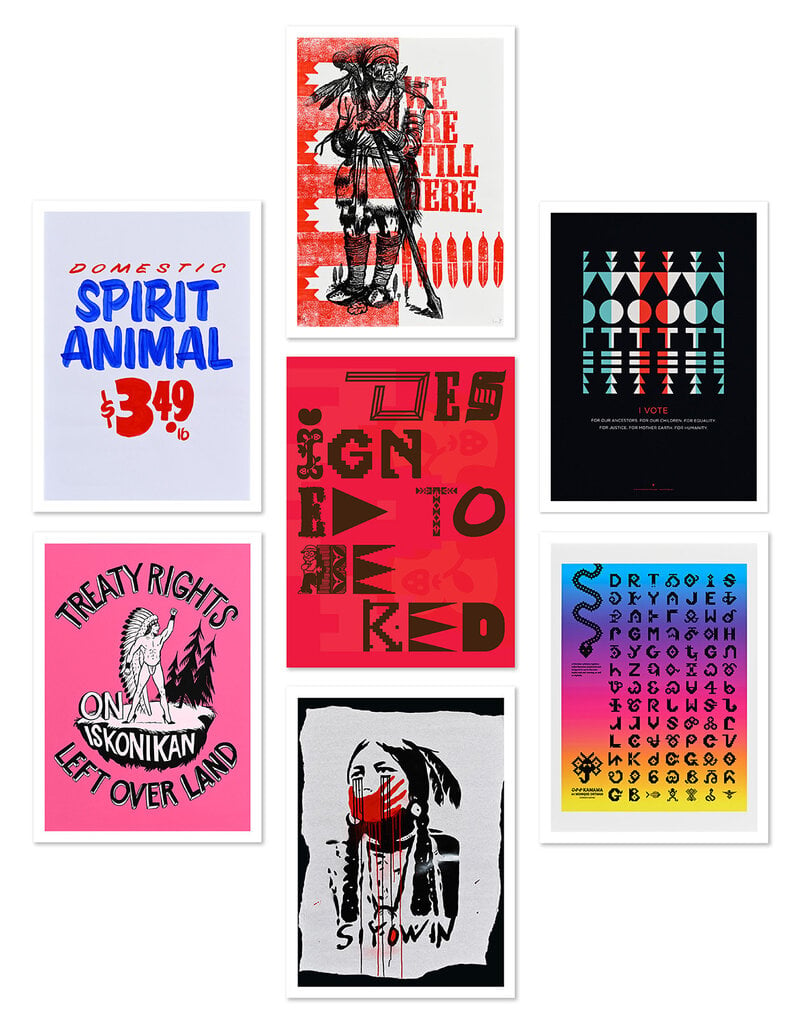
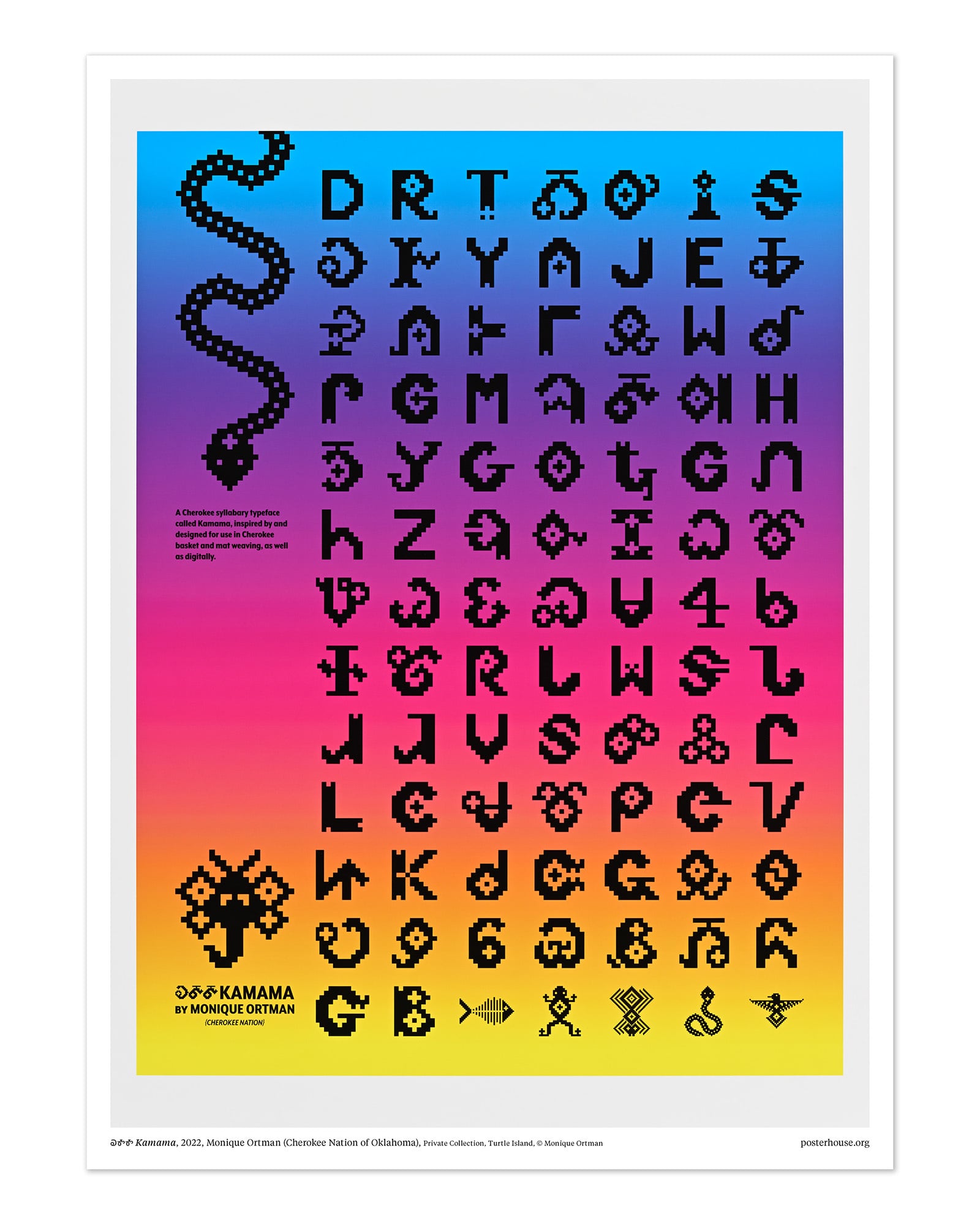
A print of ᎧᎹᎹ Kamama, 2022, by Monique Ortman (Cherokee Nation of Oklahoma).
In 1821, the Cherokee intellectual and historian Sequoyah created the Cherokee syllabary. It consists of 86 symbols, each representing a syllable in the Cherokee language. Officially adopted by the Cherokee Nation in 1825, it led to a literacy rate of approximately 90 percent among the Cherokee within a decade—far exceeding that of white settlers in the surrounding area.
Monique Ortman, a citizen of the Cherokee Nation of Oklahoma, whose artistic practice encompasses paper-weaving, mat-weaving, and type design, designed this syllabary poster for both traditional craft and digital platforms. In it, historic letterforms have been updated to reflect a more contemporary, punk aesthetic and can be woven into textiles or coded into websites. The syllabary brings Cherokee visual culture into the modern era, indicating that the Cherokee language belongs equally in ancestral crafts and emerging technologies.
ᎧᎹᎹ (kamama) means both “butterfly” and “elephant” in Cherokee, reflecting the visual resonance between butterfly wings and elephant ears. The title of the poster also suggests transformation and memory—the butterfly's metamorphosis combined with the elephant's vast memory. With few Indigenous-made typefaces available, Ortman's work fills a gap and promotes cultural pride and ownership over language; it’s a powerful example of a Cherokee person designing Cherokee letters for Cherokee use.
Measures 15.25 x 11 inches. Ships rolled.
© Monique Ortman