
| Availability: | In stock |
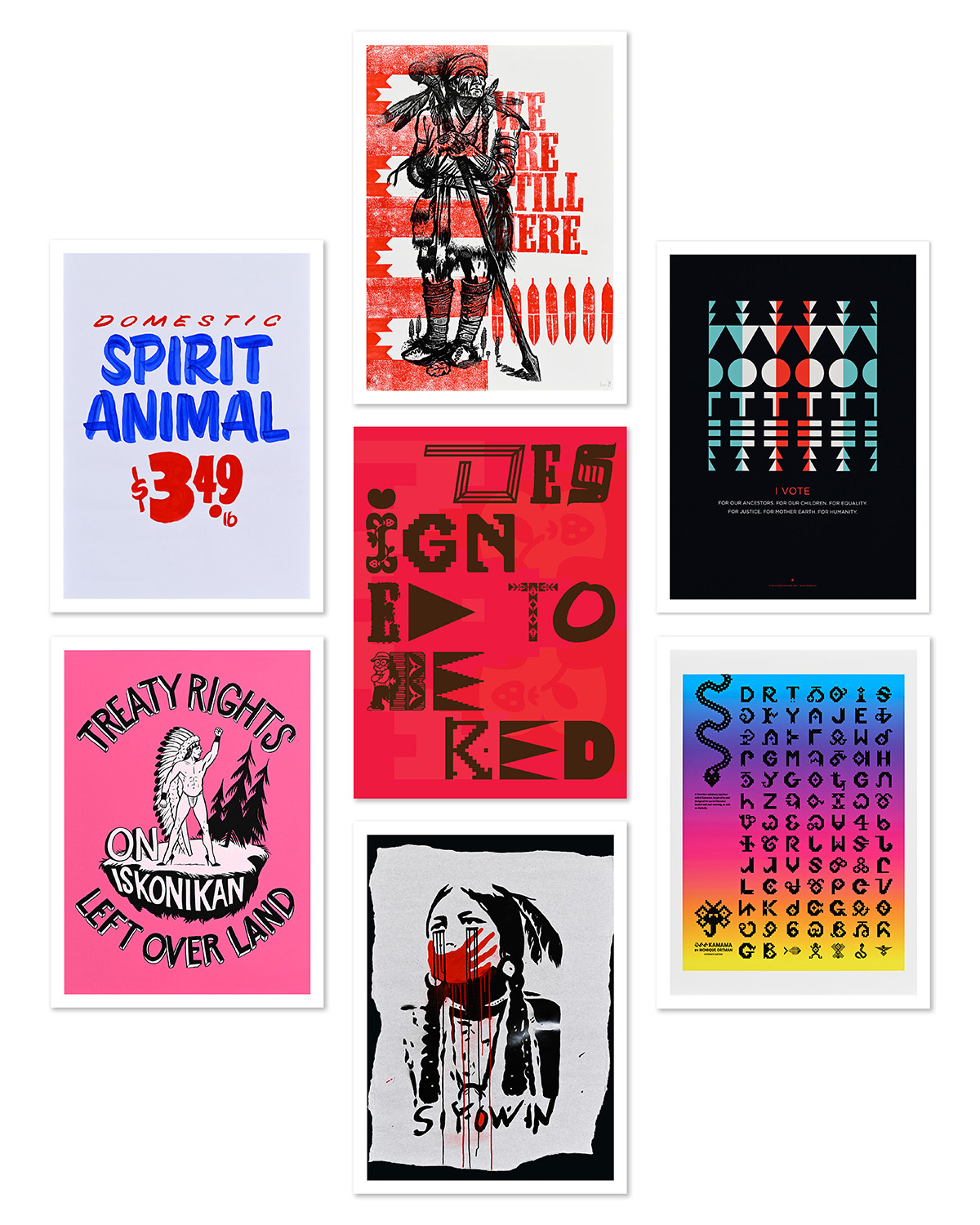
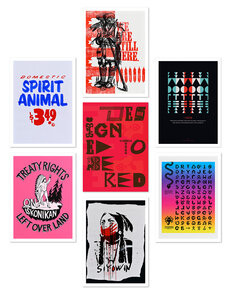
Postcards from the exhibition Designed to Be Red: Native American & Indigenous Poster Works.
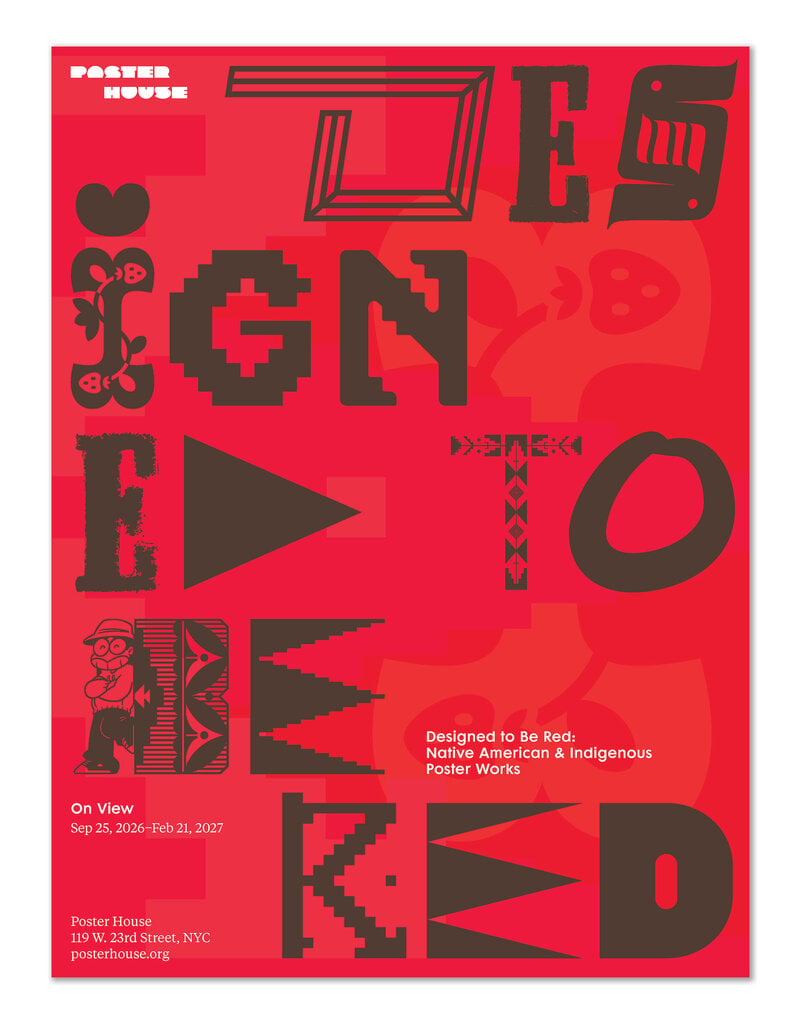
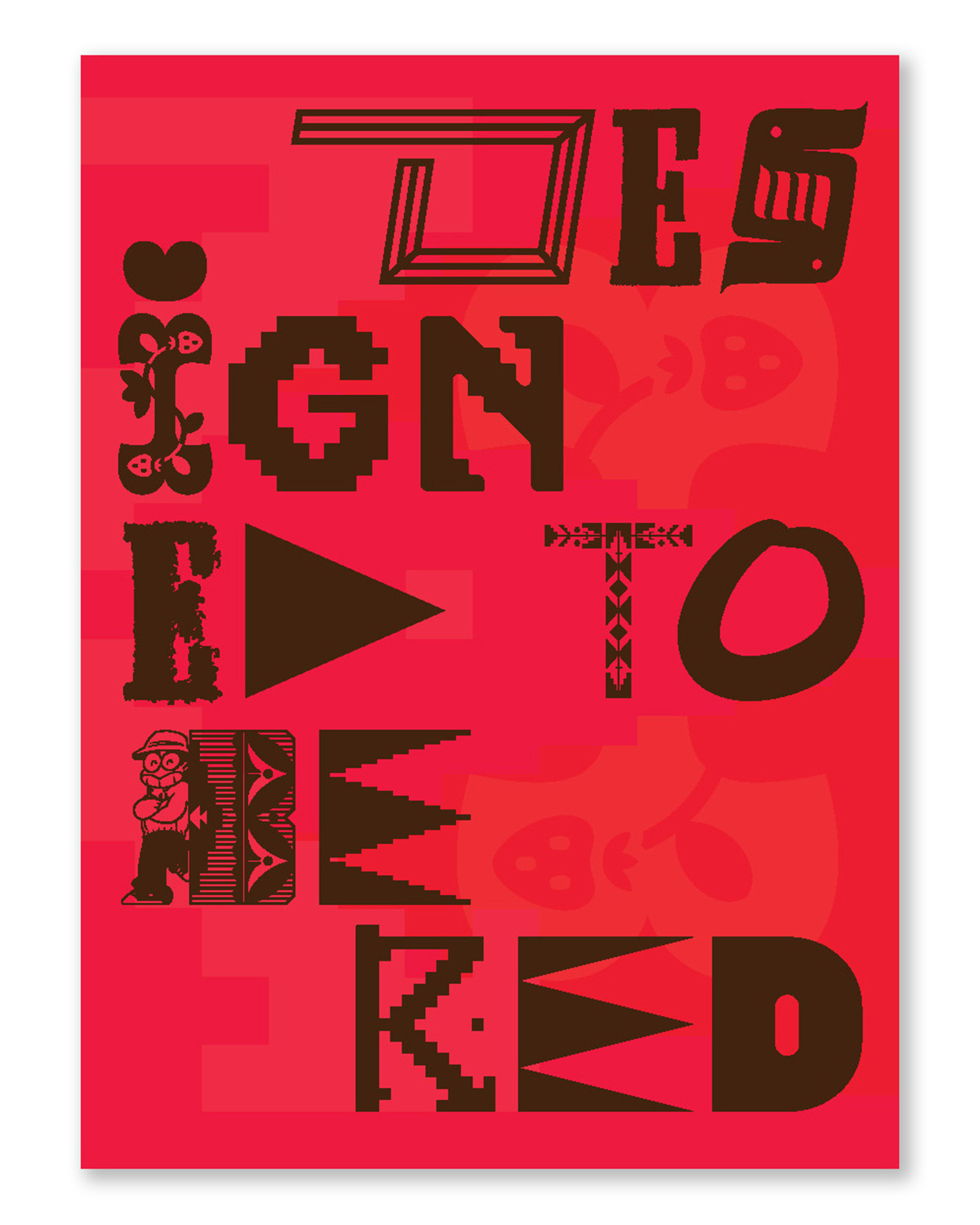
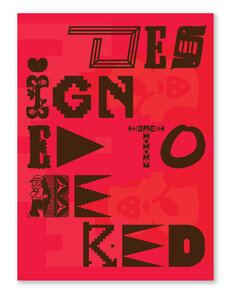
Designed to Be Red Title Design, 2026
To create the exhibition title design for Designed to Be Red, Poster House commissioned Native American and Indigenous designers and allies to contribute individual letterforms. Each character reflects the designer's unique visual language, drawing from their cultural background, their personal creative practice, and the vernacular of their community. Together, these letterforms highlight the richness, diversity, and innovation of contemporary Indigenous design.
Designers include Leo Vicenti (Jicarilla Apache), Jimmy Dean Horn (Chickasaw Nation), Whess Harman (Carrier Wit’at Nation), Chris Skillern (Cherokee Nation), Monique Ortman (Cherokee Nation), Joshua Whitehead (Choctaw Nation), Bobby Joe Smith III (Lakota [Húŋkpapha and Oóhenuŋpa]), Cem Eskinazi (from SURVIVA based on handwriting of Cannupa Hanska [Three Affiliated Tribes of Fort Berthold (Mandan, Hidatsa, Arikara) and Lakota]), Ben Calabaza (Kewa), Isaac Boss (Akimal O'odham, Hopi, Laguna, Kewa), and Emma Waggoner (Cherokee Nation).
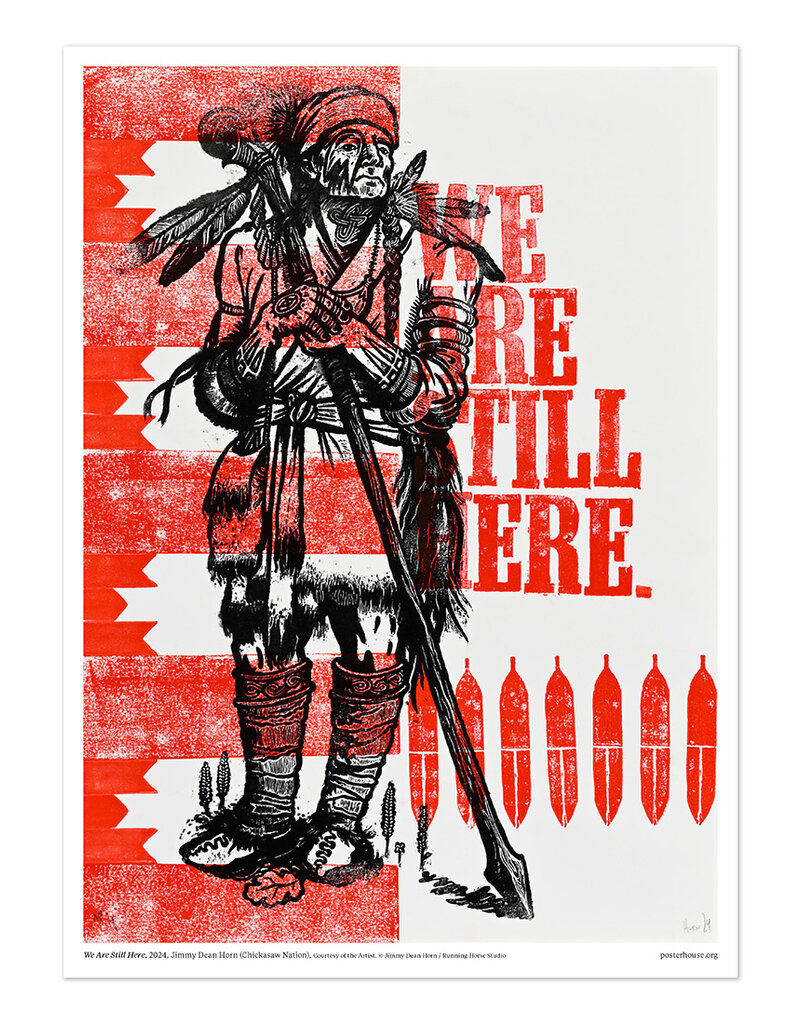
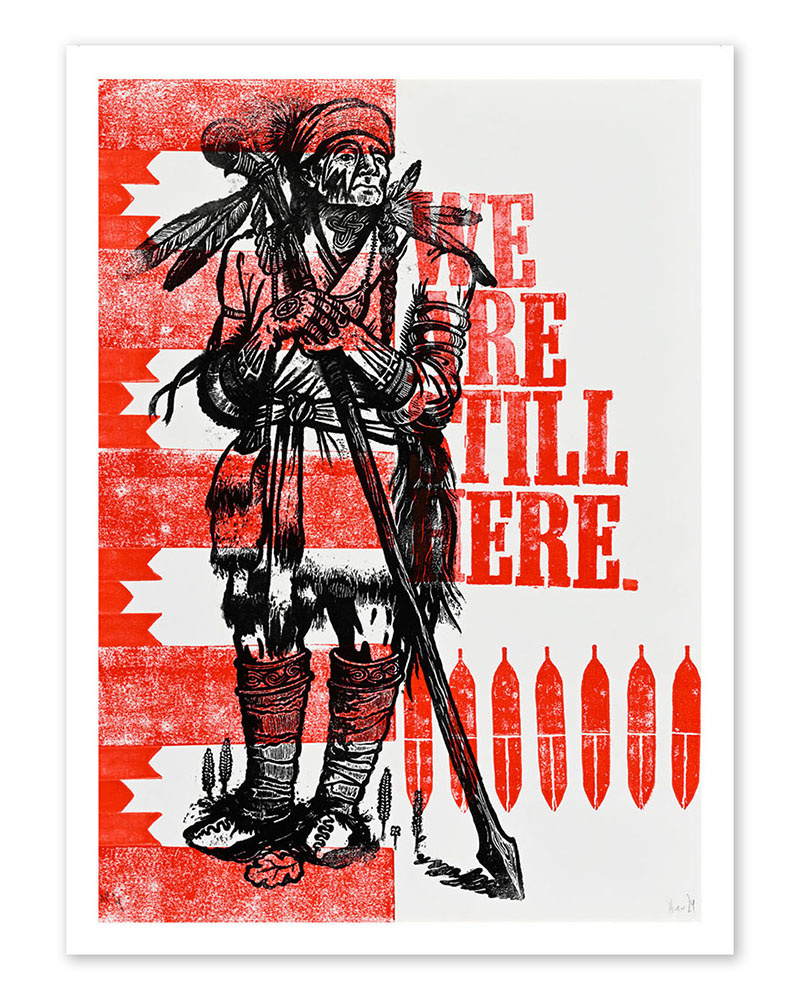
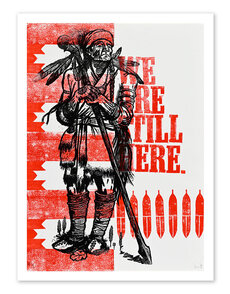
We Are Still Here, 2024, by Jimmy Dean Horn (Chickasaw Nation), © Jimmy Dean Horn / Running Horse Studio
Jimmy Dean Horn lettered the declaration “We Are Still Here” in a hand-cut typeface based on that found on the packaging of Marlboro cigarettes, a brand known for its cowboy figures and fantasy depictions of the American West. This interpretation of the font subverts colonial imagery as an act of Indigenous resistance.
Alongside the lettering is a standing portrait of Hopayi' Minko' (Piomingo, c. 1750–99), a Chickasaw chief and diplomat. Dressed in traditional garb, he holds the staff featured in Chickasaw/Choctaw origin stories. In them, two brothers flee from the west to the east, the staff marking their leadership and initiative.
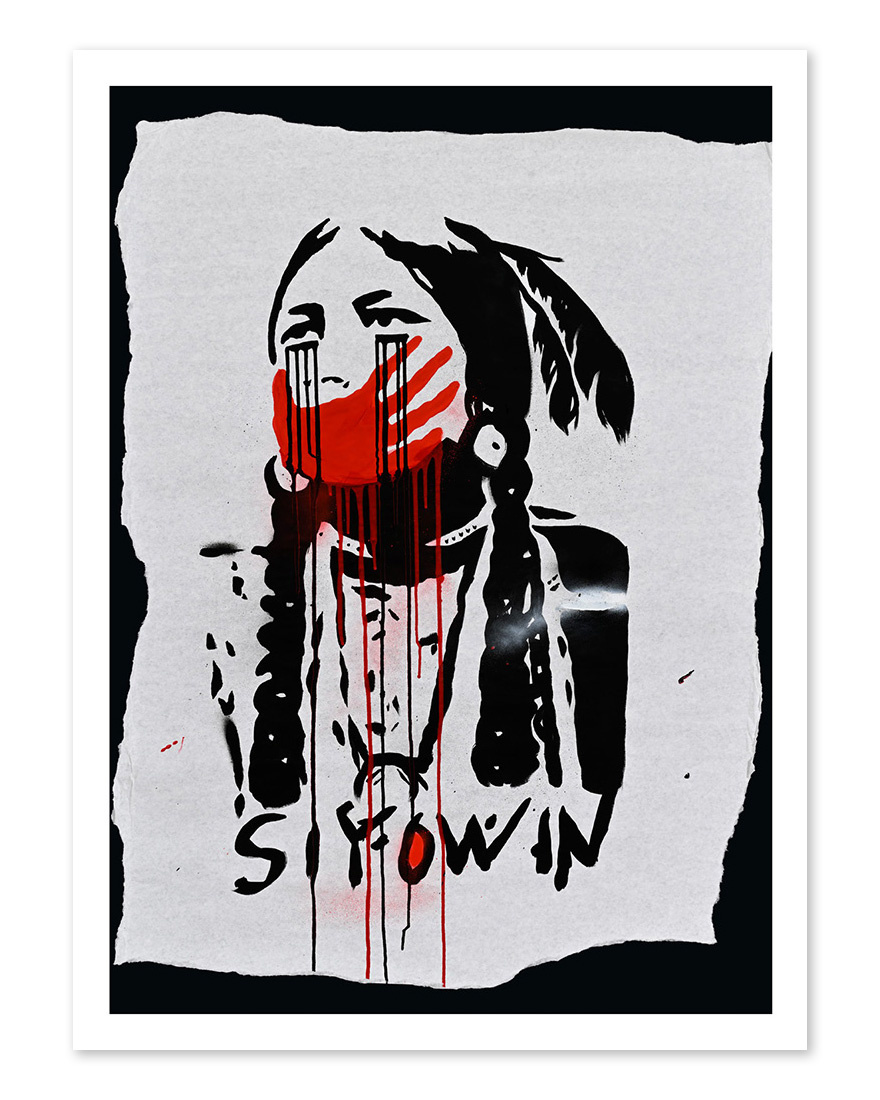
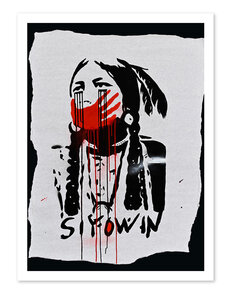
Protect the Sacred, 2024, SIYO-WIN (Dakota Sioux/Mexican) © SIYO-WIN
Indigenous women and girls are murdered at a rate that is 10 times that of the national average, and homicide is the third leading cause of death. More than 80 percent of them also experience stalking as well as physical or sexual violence. Despite these alarming statistics, their cases routinely vanish from official databases, unrecorded and uninvestigated. This problem is so vast and so common that these victims are collectively known as Missing and Murdered Indigenous Women (MMIW).
Born out of grassroots concern and outrage, the MMIW movement uses a red handprint across the mouth as its international symbol, representing the silencing of these women and girls as well as the society that fails to speak up for them. This poster is one of many that incorporates this motif, and was wheatpasted throughout Los Angeles in 2024.
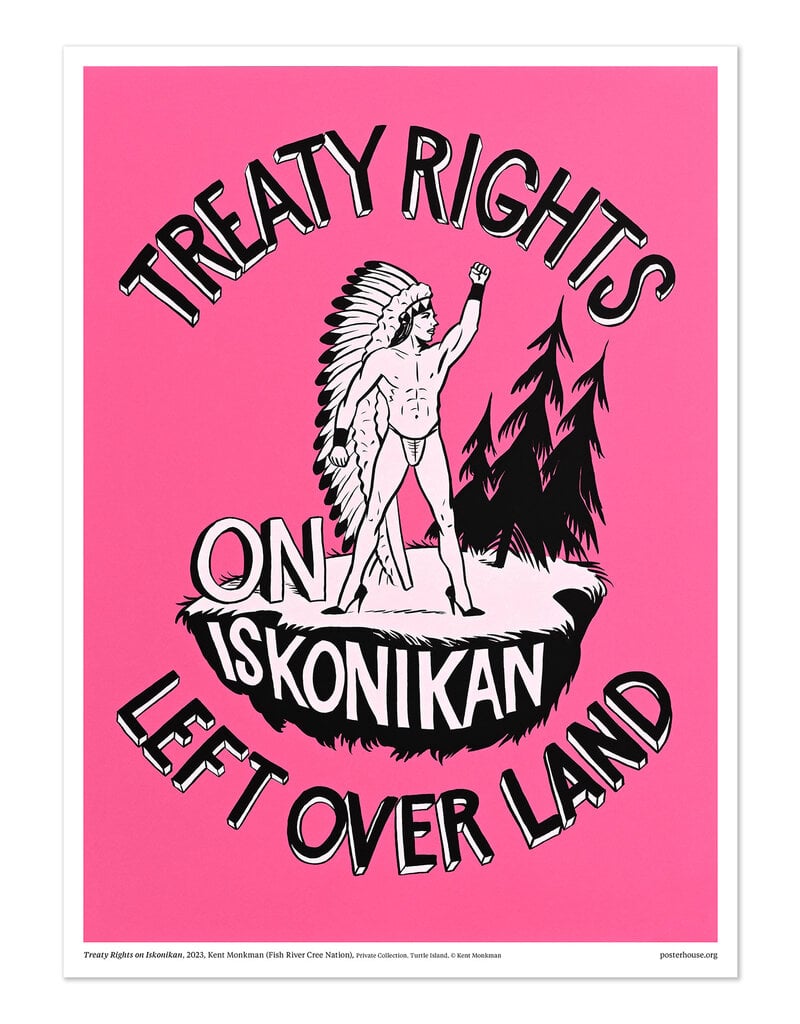
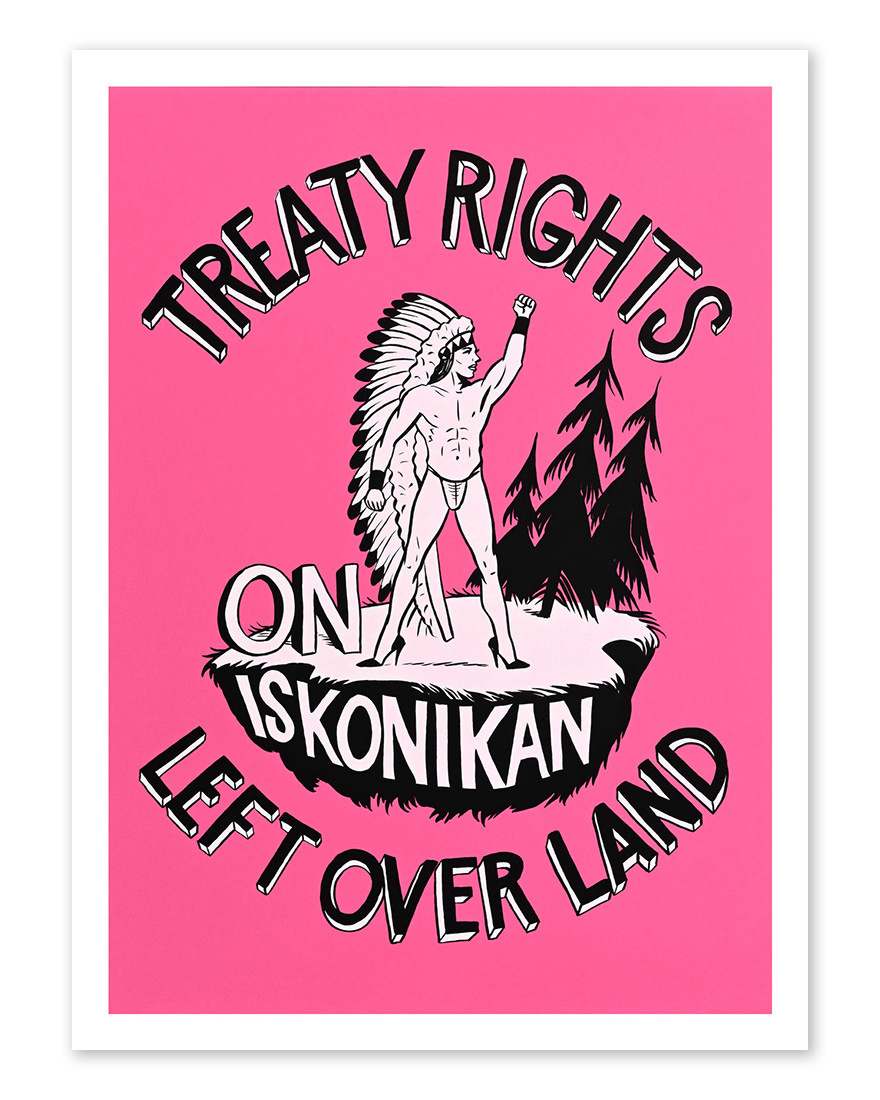
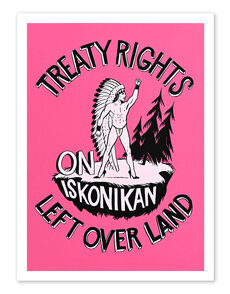
Treaty Rights on Iskonikan, 2023, by Kent Monkman (Fish River Cree Nation), © Kent Monkman
Iskonikan is the Cree word for “leftover land,” a phrase used to describe the reserves onto which the Canadian government forced Indigenous people, areas that they could not legally leave until all the way into the 1950s. In the lead-up to this displacement, numerous treaties were signed, many of which stated that Native people would retain the right to hunt, fish, and gather on the land they were ceding. None of these agreements were honored.
The original poster by Kent Monkman features his Two-Spirit alter ego, Miss Chief Eagle Testickle—a figure present throughout his extensive body of work and one that embodies multiple forms of cultural resistance. Representing both masculine and feminine spirits, Miss Chief most often appears in order to actively reclaim gender identities that predate colonization and that were often targeted for erasure by Christian authorities.
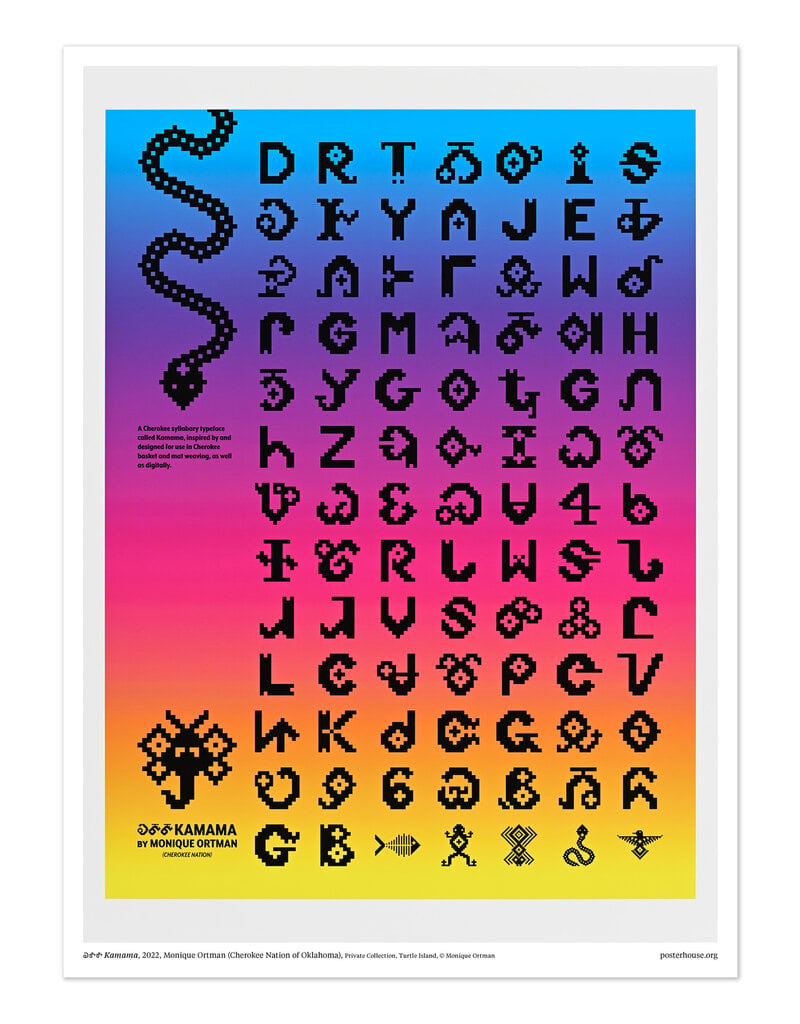
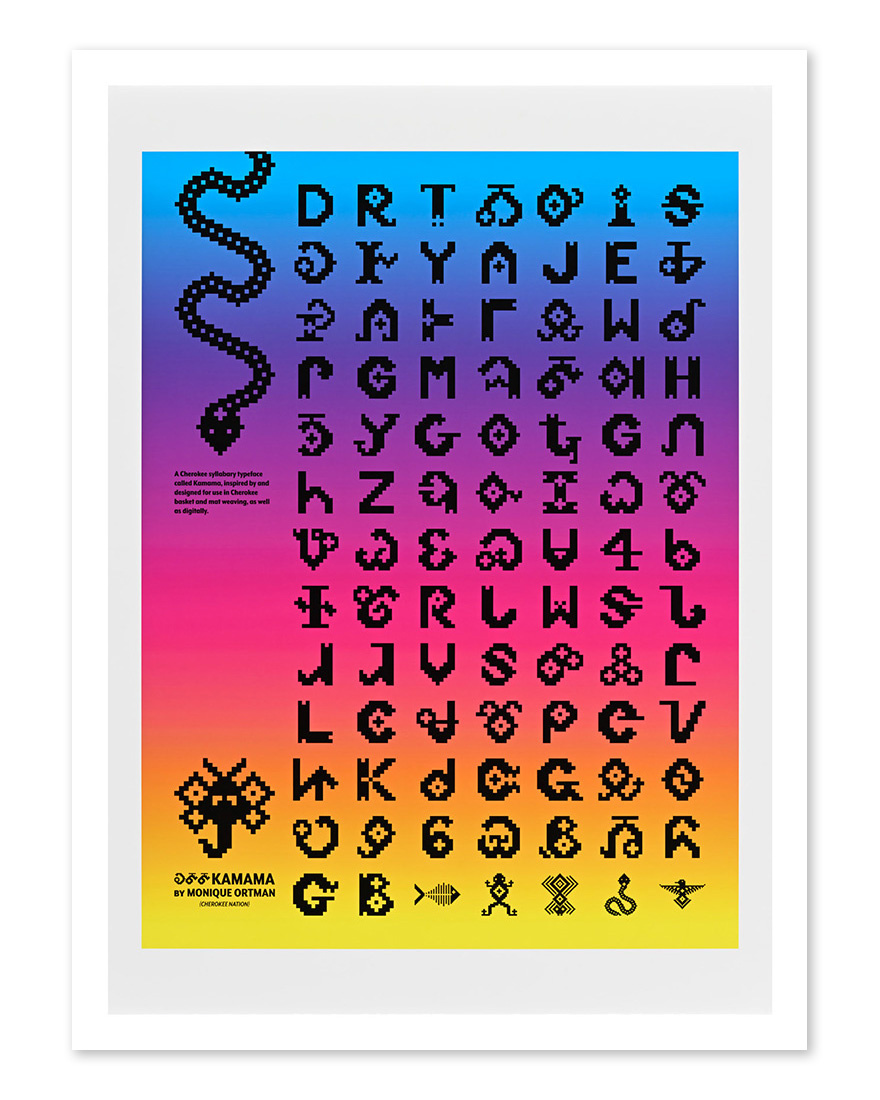
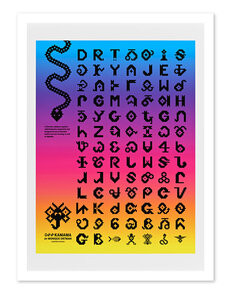
ᎧᎹᎹ Kamama, 2022, by Monique Ortman (Cherokee Nation of Oklahoma), © Monique Ortman
In 1821, the Cherokee intellectual and historian Sequoyah created the Cherokee syllabary. It consists of 86 symbols, each representing a syllable in the Cherokee language. Officially adopted by the Cherokee Nation in 1825, it led to a literacy rate of approximately 90 percent among the Cherokee within a decade—far exceeding that of white settlers in the surrounding area.
Monique Ortman, a citizen of the Cherokee Nation of Oklahoma, whose artistic practice encompasses paper-weaving, mat-weaving, and type design, designed this syllabary poster for both traditional craft and digital platforms. In it, historic letterforms have been updated to reflect a more contemporary, punk aesthetic and can be woven into textiles or coded into websites. The syllabary brings Cherokee visual culture into the modern era, indicating that the Cherokee language belongs equally in ancestral crafts and emerging technologies.
ᎧᎹᎹ (kamama) means both “butterfly” and “elephant” in Cherokee, reflecting the visual resonance between butterfly wings and elephant ears. The title of the poster also suggests transformation and memory—the butterfly's metamorphosis combined with the elephant's vast memory. With few Indigenous-made typefaces available, Ortman's work fills a gap and promotes cultural pride and ownership over language; it’s a powerful example of a Cherokee person designing Cherokee letters for Cherokee use.
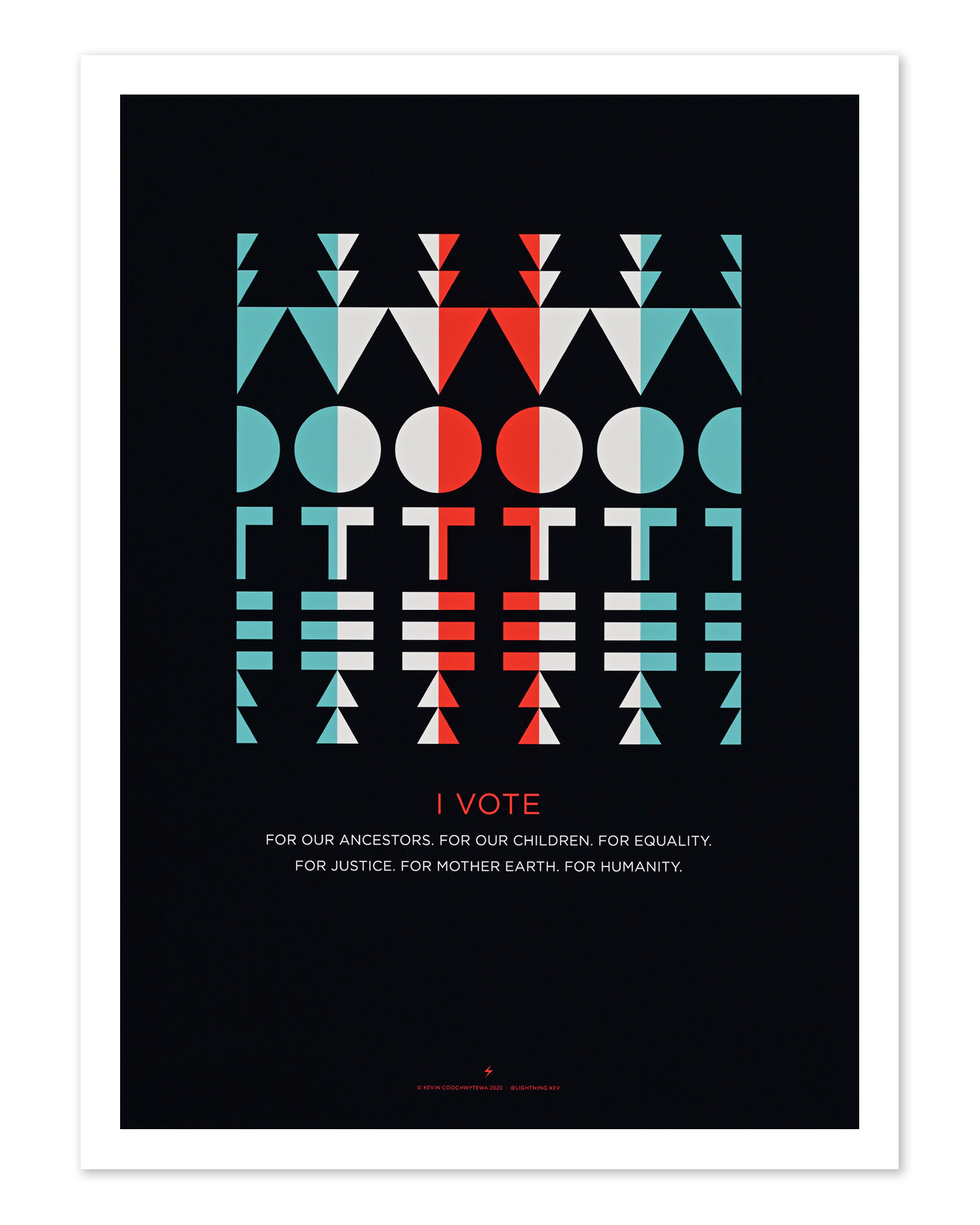
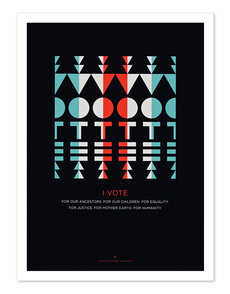
I Vote, 2020, Kevin Coochwytewa (Isleta Pueblo/Hopi), © Kevin Coochwytewa
Native Americans were not acknowledged as United States citizens until 1924, and even then, many states continued to block them from voting through discriminatory legislation. The last state, Utah, did not remove such restrictions until 1957. The Voting Rights Act of 1965, which banned tactics like literacy tests and poll taxes, and its 1975 amendments, which mandated language accessibility, were essential in making the ballot practically accessible to Native voters. Yet participation remained low since other obstacles persisted: remote polling locations, active suppression, and a shared understanding in Native communities that they were not truly welcome.
The text in this poster frames participation not as assimilation but as strategy—a tool for defending tribal sovereignty within existing systems and exercising cultural responsibility. The direct address of the phrase “I Vote” speaks to multiple scales of governance: clan, tribe, county, nation, and federal. The designer is asserting that each level needs Native voices to remind the government that Indigenous people are still present in the country.
The composition incorporates geometric shapes stacked like ceremonial patterns that simultaneously spell out “VOTE” in ribboned columns suggesting Latin letterforms and interweaving Native aesthetics with a call to participate in democratic processes.
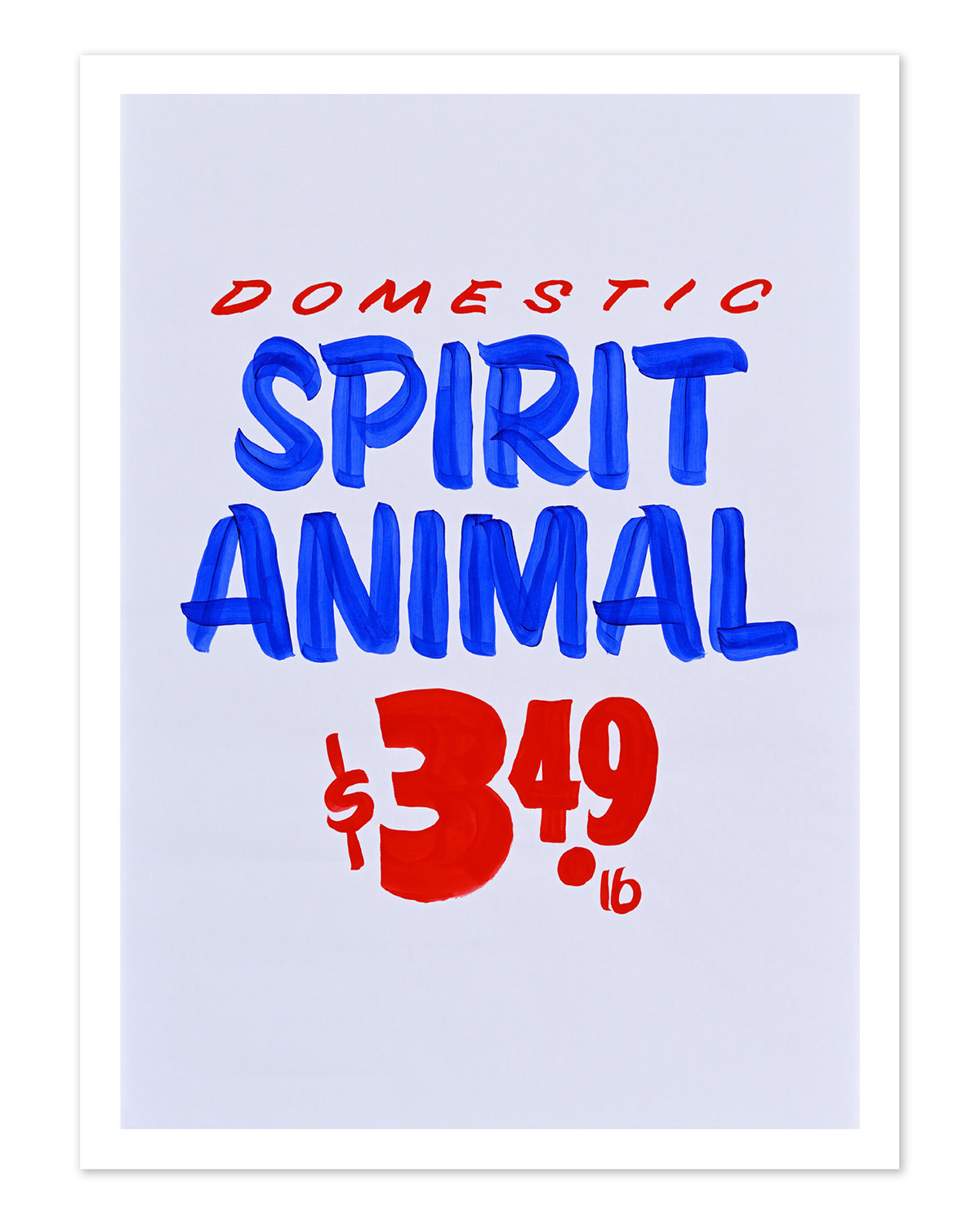
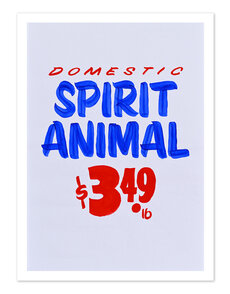
Domestic Spirit Animal, 2018, Leo Vicenti, (Jicarilla Apache), © Leo Vicenti
In this poster, Leo Vicenti uses dark humor to comment on the commodification of ancient Indigenous spiritual practices by contemporary American wellness enthusiasts. The format reflects that of the ubiquitous grocery store signs, typically hand painted or cheaply printed, that highlight the day’s low-priced specials. Rather than promote bananas or ground bison, however, it advertises spirit animals, sacred guides that choose a person through dreams and visions—here reduced to $3.49 per pound.
In many Native traditions, including Vincenti’s own Apache heritage, spirit animals are messengers and carriers of ancestral wisdom that cannot be bought or sold. They emerge through ceremony, patience, and a relationship with the natural world. Through this fake advertisement, Vicenti criticizes American culture's extractive relationship to Native spirituality, one in which it is presumed that everything, including the sacred, can be purchased.
7 postcards printed on 130lb Super smooth Cougar Bright White. Each measures 5.5 x 4 inches.